




Our latest updates
Latest articles related to the CopPhil Centre

How CopPhil tracks Ground Movement across the Philippines
Copernicus Sentinel-1 radar data makes it possible to detect ground movement with millimetre-level precision. CopPhil’s Ground Motion Monitoring Service puts that capability to work for Philippine institutions, mapping subsidence, seismic activity, and land deformation to support hazard monitoring, infrastructure planning, and disaster risk reduction.

Local Government Unit Training in Cebu City
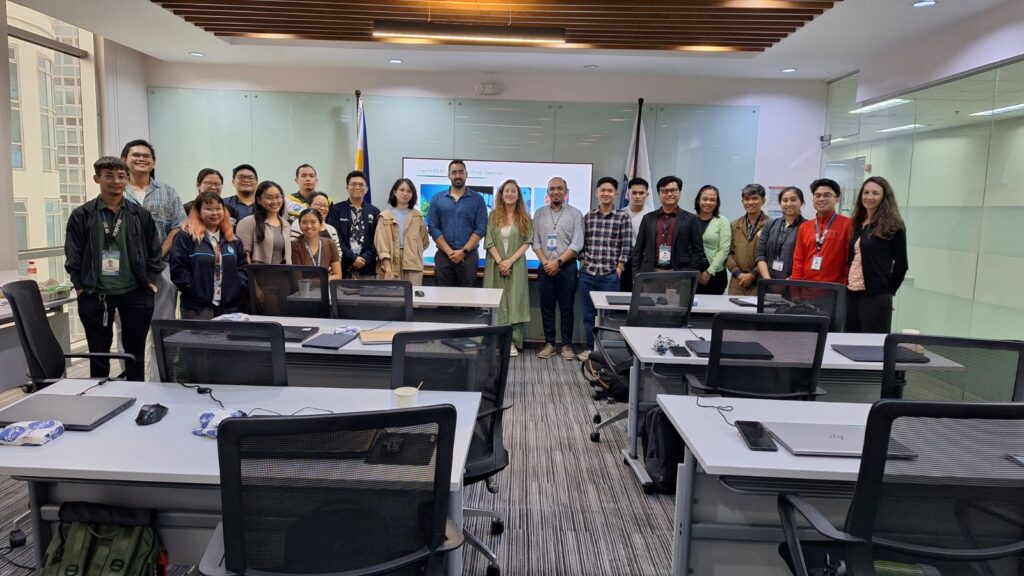
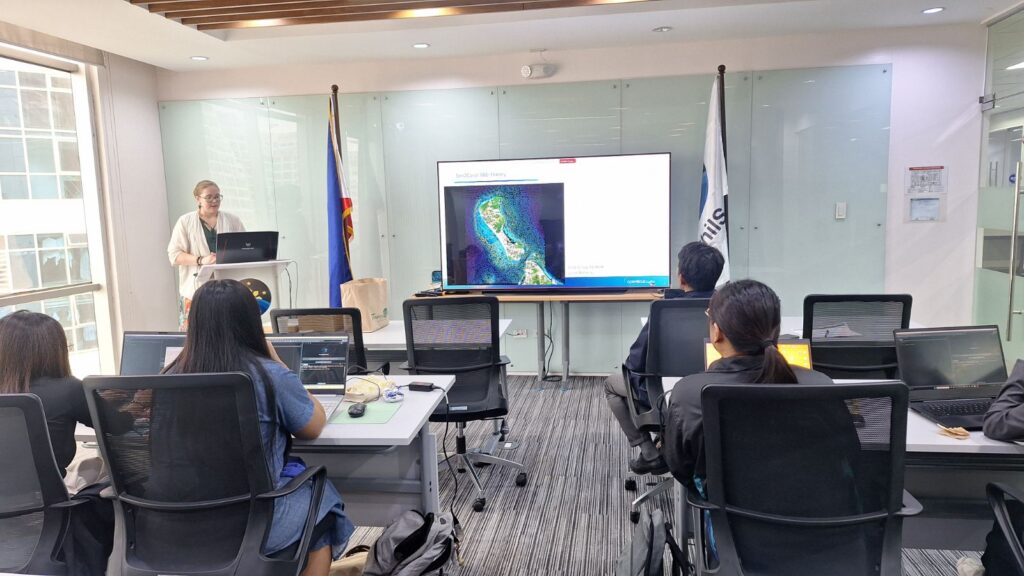
Following four training sessions delivered in 2025 and early 2026, the CopPhil Technical Assistance (TA) component conducted an additional Local Government Unit (LGU) training in Cebu City (Region VII) from 2 to 5 March 2026. The course forms part of a broader series of thirteen training packages designed primarily for LGUs.

CopPhil at ENGenium 2026: Bringing Earth Observation to the next generation
On 13-14 March 2026, CopPhil participated in ENGenium 2026, an annual event hosted by the Philippine Society of Mechanical Engineers – De La Salle University (DLSU) at the DLSU Taft Avenue campus in Manila. The event brought together students and young professionals from across disciplines, providing CopPhil a valuable opportunity to engage with one of the country’s most active university communities.

Tracking Land Use Change Across the Philippines with CopPhil
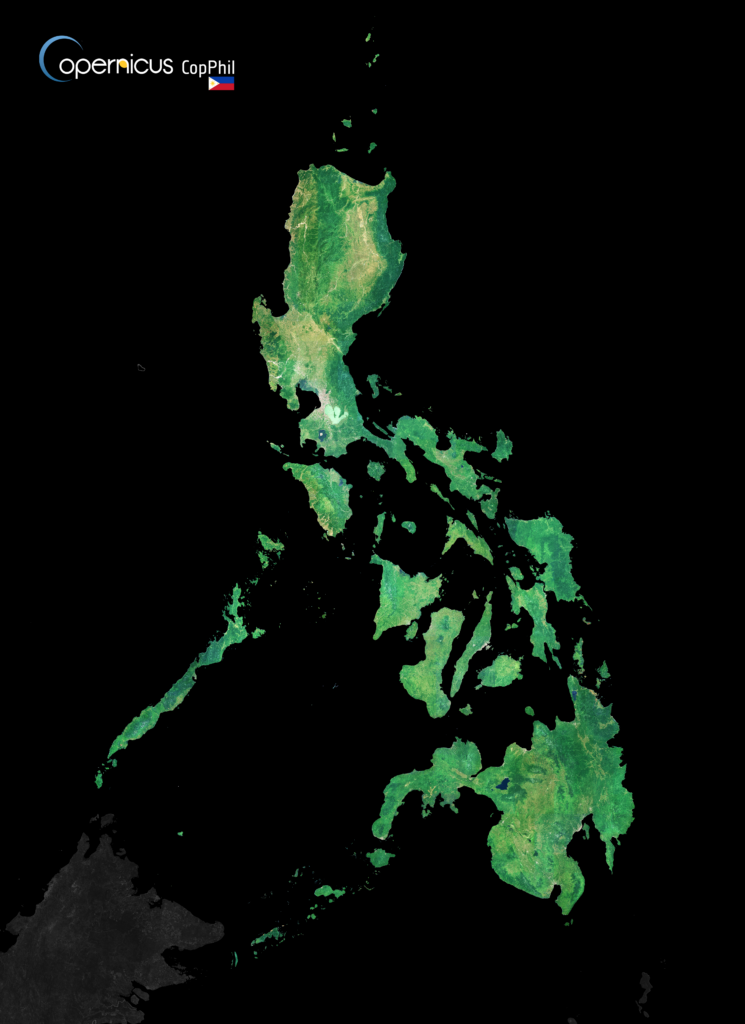
Discover how CopPhil’s Land Cover, Forest & Crop Mapping Service uses Copernicus Sentinel satellite data to monitor forests, agricultural land, and urban expansion across the Philippines. The service supports sustainable land management, food security, and climate resilience.
Overview
The objective of CopPhil (National Copernicus Capacity Support Action Programme) is to strengthen the Philippines’ capacity to tackle climate vulnerability and biodiversity conservation while improving hazard management and resilience through the use of free and open Copernicus Earth Observation data.
It includes the establishment of a Copernicus Mirror Site and IT infrastructure, the co-development of Earth Observation pilot services in three thematic areas, and knowledge and skills transfer activities related to the use of Copernicus data and information.
CopPhil is managed by the European Union Delegation to the Philippines. It is implemented by the European Space Agency (ESA) in partnership with the Philippines Space Agency (PhilSA) and the Philippine Department of Science and Technology (DOST).
CopPhil Pilot Services
As one of the world’s most vulnerable countries to the consequences of climate change, the Philippines is facing increasing environmental pressure. The use of Earth Observation technologies by institutions in the Philippines to address regional challenges has been steadily increasing, since the information derived from Earth Observation data is critical to the sustainable management and future of the country and the broader ASEAN region. To support this trend, the CopPhil Centre will develop Earth Observation pilot services harnessing Copernicus data in three thematic areas:
- Ground Motion Monitoring Service
- Land Cover, Forest & Crop Mapping Service
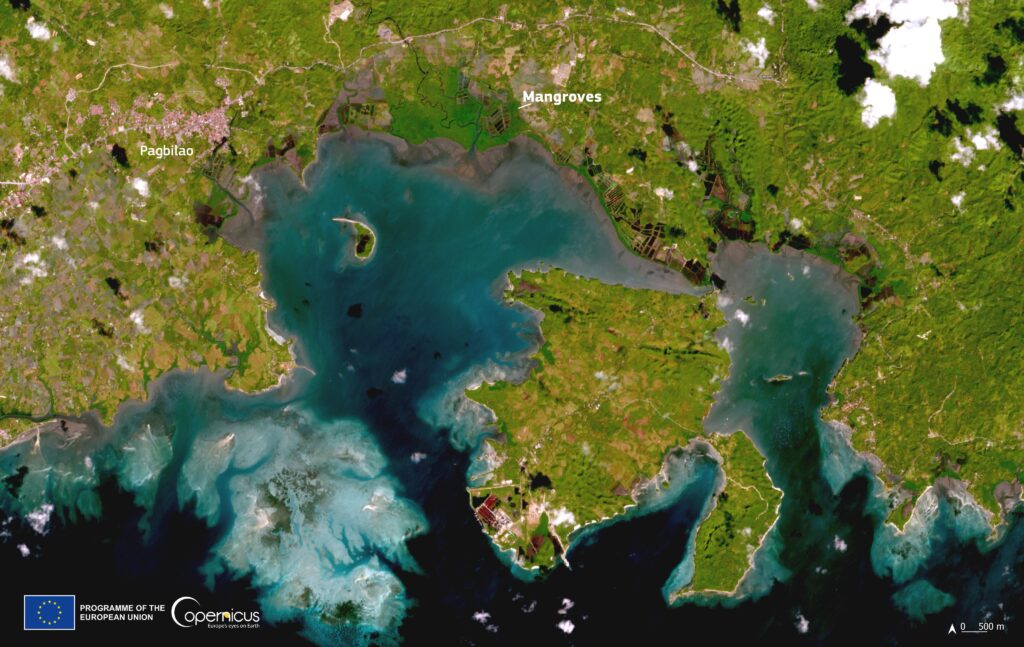
- Coastal Marine (benthic) Habitat Monitoring Service